Guard Dog vs Family Protection Dog: Which Do You Need?
Choosing a security dog in Kenya? The difference between watchdogs, guard dogs and family protection dogs, the best breeds, and what responsible ownership takes.
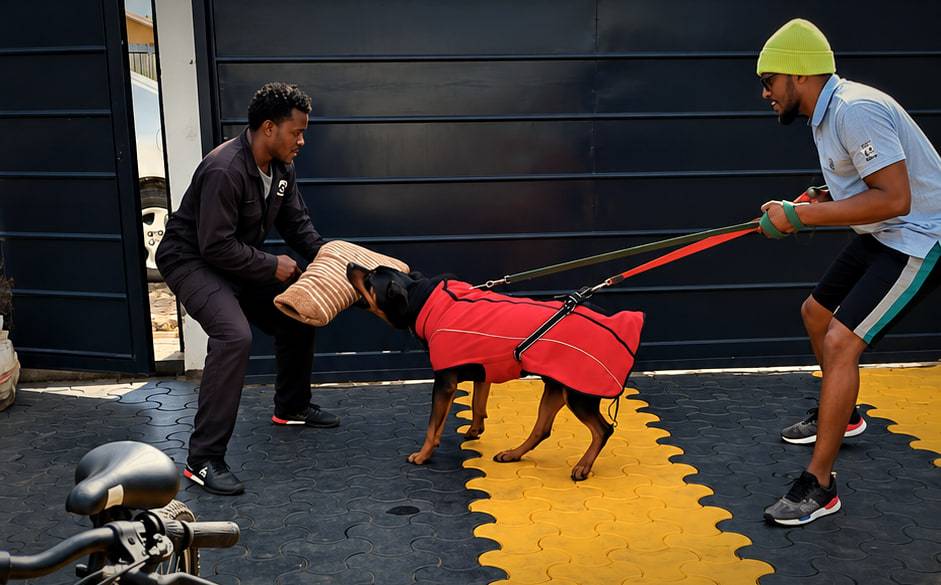
Many homes and businesses in Nairobi and Kiambu keep dogs for security. But “a security dog” can mean very different things, and choosing the wrong type, or training it the wrong way, can create a dog that is dangerous to the family and visitors rather than a deterrent to intruders. Here is a plain-language guide.
Three kinds of “security” dog
Watchdog (alert dog)
A watchdog barks to alert you when someone approaches, then stops. Most dogs do this naturally to some degree. A good watchdog can be any size and is often a perfectly friendly family dog.
Best for: most households. Alerting is a strong deterrent on its own, because intruders prefer quiet targets.
Guard dog (territorial)
A guard dog guards a property or area, such as a compound, plot or business premises, and will challenge intruders inside it. Traditionally many guard dogs in Kenya are kept separately from the family, often in kennels during the day and released at night.
Best for: businesses, construction sites, large plots and premises where people are not around at night.
Watch out for: a poorly socialised guard dog can be impossible for anyone but one person to handle, and dangerous to staff, visitors and neighbours if it gets out.
Family protection dog (personal protection)
A family protection dog lives with the family, is social and calm with children and invited guests, and is trained to protect its handler or family under threat, and to stop instantly on command.
Best for: families who want a companion and a deterrent, and who are prepared to train and maintain the dog.
Watch out for: this level of training requires a stable, confident dog and an owner willing to keep up practice.
Which breeds are commonly used in Kenya?
- German Shepherd: intelligent, versatile, a classic all-rounder.
- Belgian Malinois: very driven and athletic; needs an experienced, active owner.
- Rottweiler: confident and powerful; needs early socialisation and firm, fair structure.
- Doberman: alert, fast and loyal; sensitive and responsive to good training.
- Boerboel: a large, strong, territorial mastiff type; needs careful socialisation and handling.
Breed is only part of the picture. Temperament, health and training matter more. A nervous dog of any breed should not be pushed into bite work.
What makes a protection dog safe
- Sound nerves. The dog must be confident, not fearful. Fear-based aggression is unpredictable.
- Obedience first. Recall, heel, down and, above all, “out” (release) must be reliable before protection work starts. See our obedience training.
- Control over arousal. The dog switches on when told and switches off when told.
- Socialisation. The dog must be comfortable with normal life: visitors, children, vets and traffic.
- A capable handler. The owner must be trained too, and keep training going.
Responsible ownership
- Secure your compound. Fences and gates must reliably contain the dog.
- Never “make” a dog aggressive by teasing, starving or isolating it. It creates a dangerous dog, not a protective one.
- Exercise and stimulation. Working breeds need daily physical and mental work.
- Know your responsibility. Owners are accountable for what their dog does. Get advice if you are unsure.
Our recommendation
For most families, a well-socialised, well-trained dog with natural alerting, plus secure gates and walls, provides excellent security. For businesses and higher-risk situations, a trained guard or protection dog may be appropriate, provided the dog is suitable and the owner is committed.
Not sure what you need? We assess your dog and your situation honestly before recommending protection K9 training. Send us a WhatsApp message to talk it through.
Have a question about your own dog?
Every dog is different. Send us a message and a trainer will give you honest, practical advice.
Ask on WhatsAppThis guide is general information from G.A.P on Everything Dogs, not veterinary advice. If your dog is unwell, injured or has eaten something toxic, contact a vet straight away.