
Guard Dog vs Family Protection Dog: Which Do You Need?
Choosing a security dog in Kenya? The difference between watchdogs, guard dogs and family protection dogs, the best breeds, and what responsible ownership takes.
Training · K9
A protection dog must be a deterrent to threats and safe with family. We build controlled protection on top of rock-solid obedience, never the other way round.

The dog barks and alerts on command or at real intruders, then settles when told.
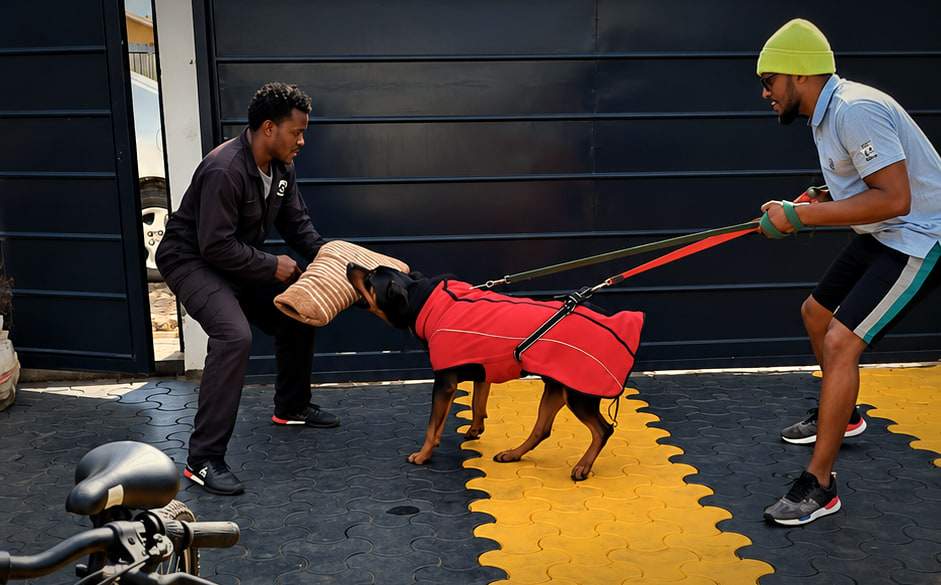
Bite-sleeve work with a trained decoy, always with a reliable out (release) and recall.
Patrol and guarding habits that suit Kenyan homes, plots and business premises.
For suitable dogs, protecting the handler under threat while remaining social and controllable in public.
The most important command a protection dog knows is not “attack”. It is “out”: let go, come back, settle. A reliable guard dog is calm until it needs to act, acts on clear triggers, and stops the moment it is told. That level of control comes from patient, structured training, not from making a dog angry.
At G.A.P we train protection on top of solid obedience. Engagement, focus, recall and the release are proofed first. Bite work follows, using padded sleeves and a trained decoy, in controlled sessions.
A trained protection dog is a serious responsibility. It needs secure fencing and gates, daily exercise, ongoing training and an owner who is in control. Under Kenyan law the owner is responsible for what their dog does, so we will talk honestly about whether protection training is the right choice for your household. If your home has young children or many visitors, a well-trained family dog with natural alerting may suit you better.
If you are buying a puppy for future security work, talk to us first. A well-bred dog with sound nerves will train faster and be far safer. Read guard dog vs family protection dog for a plain-language comparison.
FAQ
No. Protection work needs a physically healthy, mentally stable and confident dog. Nervous or fearful dogs should not be pushed into bite work because it can make them dangerous. We assess every dog before recommending protection training.
Done properly, no. Good protection training teaches control. The dog learns when to engage and, just as importantly, when to stop. Obedience comes first, and the dog must remain social and handleable.
Foundations such as obedience, confidence and drive building can start young, but serious protection work usually starts with physically mature, stable adult dogs. The right timing depends on the breed and the individual dog.
German Shepherds, Belgian Malinois, Rottweilers, Dobermans and Boerboels are common choices. Temperament, health and training matter more than breed alone.
Yes. A protection dog is only as safe as its handler. We teach you how to control, exercise, and secure the dog, and how to keep training sharp.
Related
A dog that comes when called, walks without pulling and stays where you put it. Obedience is the foundation for a safe, relaxed life together.
From the first sit to a reliable protection dog. We train the dog in front of you and teach you to handle it, so the results last after we leave.
Aggression, reactivity, fear and anxiety are stressful for the dog and the family. We find out why the behaviour happens and change it with a clear, safe plan.

Nairobi & Kiambu
Tell us your dog’s breed, age and what you want to change. A trainer will reply on WhatsApp with honest advice and the next step.
Open 24 hours Mon, Tue, Thu, Fri & Sat. Pricing on request via WhatsApp. Prefer email? Send us a message or use the contact form.