Puppy Training Timeline: What to Teach from 8 Weeks to 1 Year
A month-by-month puppy training plan for Kenyan homes. Toilet training, biting, socialisation, recall and lead walking, with what to expect at each age.
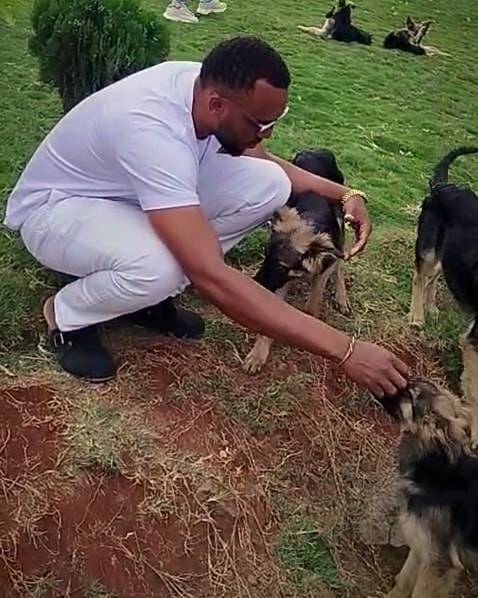
Bringing a puppy home is exciting and, honestly, a little chaotic. The good news: puppies learn incredibly fast. The habits you build in the first year will shape the dog you live with for the next ten or more. Here is a practical timeline we use with owners in Nairobi and Kiambu.
Every puppy is different. Breed, temperament and history all affect the pace. Use this as a guide, not a deadline.
8 to 10 weeks: settling in
Goals: feel safe, learn the routine, start toilet training.
- Routine. Fixed times for meals, toilet breaks, play and naps. Puppies need a lot of sleep, often 16 to 18 hours a day.
- Toilet training. Take your puppy to the same toilet spot after waking, after eating, after play and every one to two hours. Reward quietly the moment they finish.
- Name game. Say the name once; when the puppy looks at you, reward. This becomes the base for recall.
- Handling. Gently touch paws, ears and mouth for a second at a time, then reward. You are preparing for grooming and vet visits.
- Crate or quiet space. Make a cosy den with a blanket. Feed meals there so it becomes a good place.
10 to 12 weeks: the socialisation window
Goals: positive experiences with the world.
The period up to roughly 12 to 16 weeks is when puppies most easily accept new things as normal. Missing it is a common reason for fearful or reactive adult dogs.
- Let your puppy meet calm people of different ages, including people wearing hats, uniforms and helmets.
- Introduce household sounds: the gate, the generator, rain on the roof, the blender, cars and motorbikes from a distance.
- Walk on different surfaces: grass, paving, gravel, tiles.
- Carry your puppy (or use a car) to see the world before vaccinations are complete, without letting it walk where unknown dogs gather.
Keep it positive. Short exposures, lots of rewards, and let your puppy retreat if it is worried. Follow your vet’s vaccination schedule, including rabies, before visiting public dog areas.
3 to 4 months: manners and first commands
Goals: sit, down, come, and gentle mouths.
- Bite inhibition. If teeth press too hard, say “ouch” calmly, pause the game and offer a toy instead. Overtired puppies bite more, so enforce naps.
- Sit and down. Lure with food, mark the moment (“yes!”), reward. Keep sessions to a few minutes.
- Recall. Practise “come” in the house and compound with high-value rewards. Never call your puppy to punish it.
- Lead and collar. Let the puppy wear a light collar, then attach a lead indoors and follow it around before you start leading.
4 to 6 months: teething and testing
Goals: chew control, lead walking, impulse control.
- Teething. Provide safe chew toys. Puppy-proof shoes, cables and garden hoses.
- Leave it. Teach your puppy to ignore food on the floor, which could one day save its life.
- Wait. At doors, gates and before meals. This prevents gate-rushing later.
- Loose-lead walking. Reward your puppy for walking next to you. Stop when it pulls.
Puppies at this age often “forget” what they knew. That is normal. Keep practising.
6 to 12 months: adolescence
Goals: consistency, real-world practice, energy outlet.
Adolescent dogs push boundaries, much like teenagers. Large breeds are now strong, so this is when untrained habits become real problems.
- Practise commands in new places and around distractions.
- Increase exercise sensibly. For large breeds, avoid long runs on hard ground and repetitive jumping while the joints are still growing; ask your vet when it is safe to increase intensity.
- Keep socialising with calm, well-mannered adult dogs.
- Discuss spaying or neutering timing with your vet, especially for large and giant breeds.
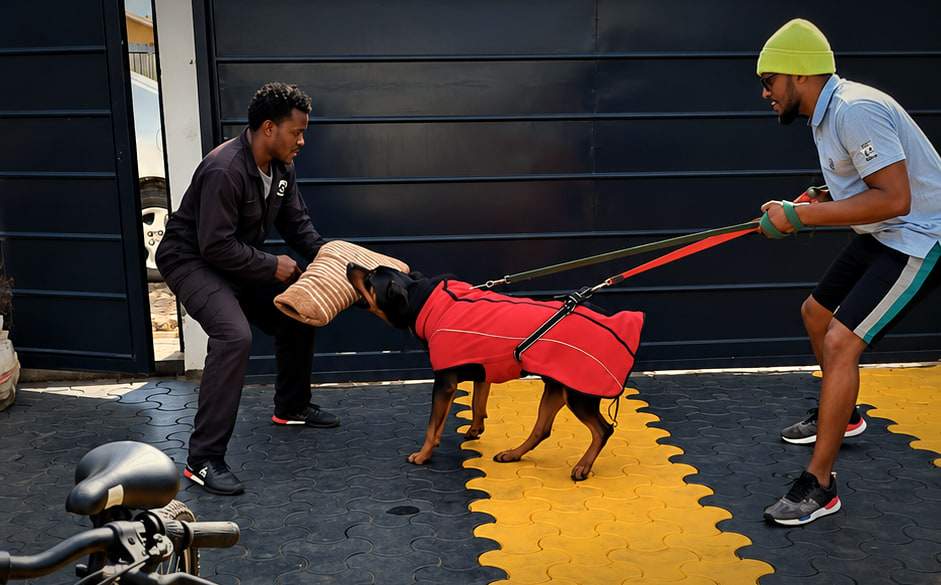
This is also the age to decide on more structured goals: advanced obedience, or for suitable dogs, foundations for protection K9 work.
Common mistakes to avoid
- Waiting until the puppy is “old enough” to start training.
- Long sessions. Three five-minute sessions beat one 30-minute session.
- Punishing toilet accidents. It teaches the puppy to hide, not to go outside.
- Letting a big-breed puppy do things you will not want from a 40 kg adult, like jumping on people.
- Isolating the puppy in a kennel far from the family. Dogs learn manners by living with people.
Need a hand?
Our puppy training programme gives you a routine for your home and teaches the whole family how to handle your puppy. Message us on WhatsApp with your puppy’s breed and age.
Have a question about your own dog?
Every dog is different. Send us a message and a trainer will give you honest, practical advice.
Ask on WhatsAppThis guide is general information from G.A.P on Everything Dogs, not veterinary advice. If your dog is unwell, injured or has eaten something toxic, contact a vet straight away.